
How Mary Britton is turning data, neighbors, and everyday decisions into a model for climate action in Minneapolis
By Angel Akurienne · Published May 12, 2026
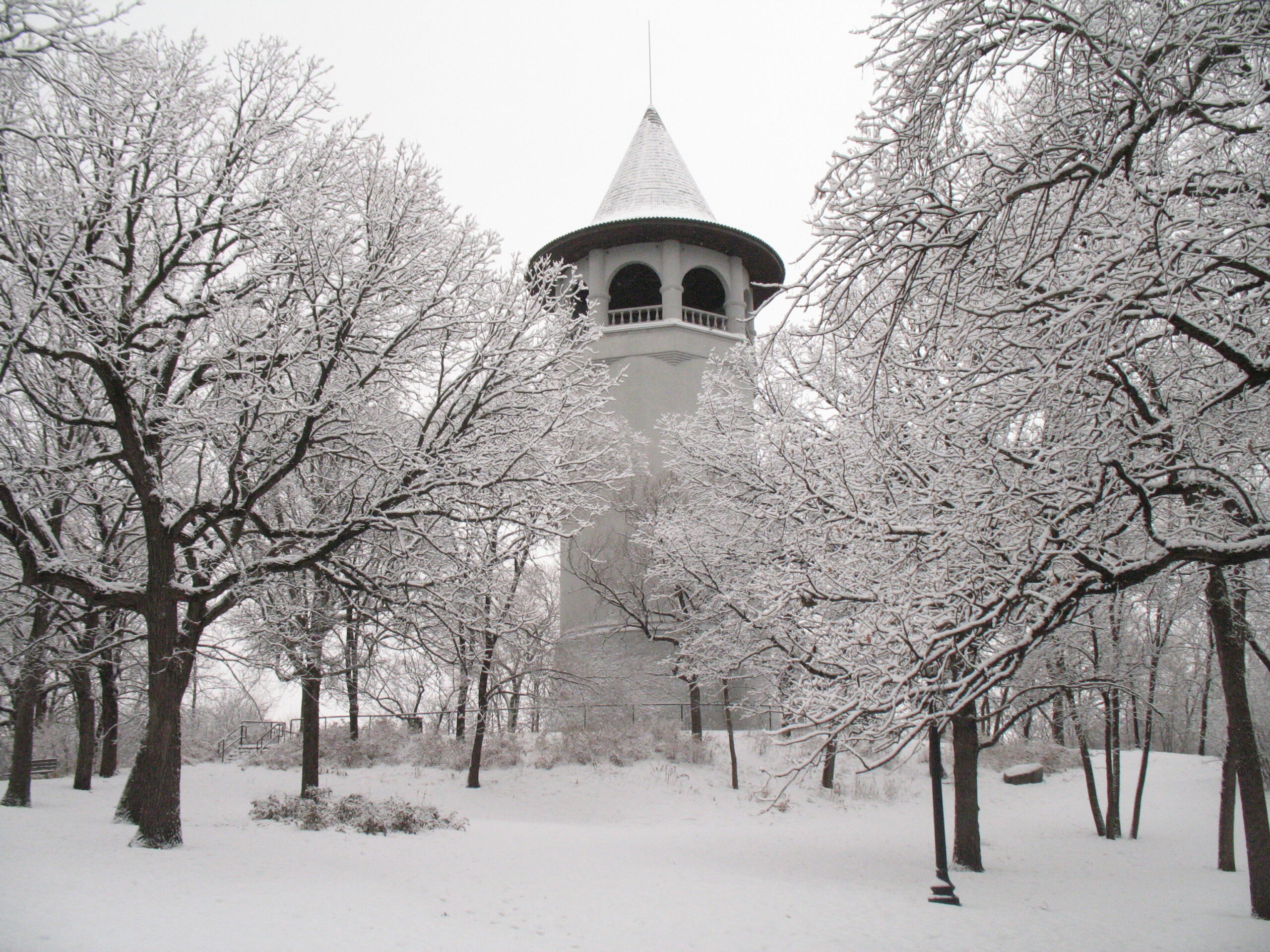
Photo courtesy: Adobe Stock
On a winter morning in Prospect Park. The bitter cold seeps in through century-old windows, beneath doors, along the edges of homes crafted long before energy efficiency was a concern. The heat hums, steady and expensive, as it works to keep up. Inside these houses, the story of climate change is built into the foundation.
For Mary Britton, that realization didn’t arrive all at once. “Every time you turned on the news, there was another part of the world just being devastated,” she recalls of 2019, when wildfires tore through Brazil and Australia. “I started asking – what can we actually measure? What can we actually change?”
While much of the climate conversation centers on electric vehicles and solar panels, Britton’s work points somewhere less visible and far less glamorous: insulation, heating systems, and natural gas usage.
When Britton served as the Chair of the Environment & Sustainability Committee for the Prospect Park neighborhood, she requested neighborhood-level data through CenterPoint Energy. She discovered something striking: Prospect Park’s natural gas usage was roughly 20% higher than average. More surprising still, most residents assumed they were already doing well.
That disconnect became her entry point. Rather than sounding the alarm, Britton chose an approach rooted in community rather than shame.
By openly sharing data from her own home energy-efficiency upgrades and helping neighbors access local and federal rebate programs, Mary Britton helped mobilize residents in Minneapolis’s Prospect Park neighborhood to make their own changes, reducing natural gas use by 29% between 2019 and 2025 .
Accompanying data shows that the citywide average reduction in annual carbon emissions fell by 20% during that same time period. Britton highlights that as a whole, the citywide decrease was solely due to the climate reality that 2025 was warmer than 2019. In fact, she stresses, “when taking weather into account, residential natural gas use is actually increasing“; highlighting the urgency of addressing natural gas use as our winters and summers warm.
It’s easy to assume that a crisis as large as climate change requires expensive or extraordinary solutions beyond the reach of most people. But Britton’s work suggests that everyday decisions, made consistently and collectively, can have measurable impact. As she puts it, “It’s almost the boring answer… insulate your house.”
A Different Kind of Climate Conversation
Britton doesn’t lead with climate change. She leads with information. With cost. With practicality.
“If I start with climate action, I lose half the audience,” she says. “But if I say – you can save money, you can be more comfortable – that’s where people lean in.”
It’s a subtle but powerful reframing. One that acknowledges a truth often overlooked in climate discourse: people don’t need more guilt – they need agency.
“People get stressed out… or they think I’m going to shame them.”
That philosophy has shaped everything from her outreach to her one-on-one conversations with neighbors.
When one neighbor raised questions about what insulation was made out of, Britton didn’t dismiss it.
“I told her I don’t have all the answers and that I can’t reassure her that it’s fine,” she says, “and once I said that…she was much more open.”
It took Mary a few years of trial and error to learn what messaging settled best for people.
“That was a learning curve. I will admit…after talking to people, hearing concerns about cost, or what it’ll do to their house or anything like that, I started changing some of my messaging and just included more information.”
Building Change, One Household at a Time
Over the past five years, Britton’s work has quietly reshaped her neighborhood.
Natural gas use has dropped by an estimated 15%. But the more meaningful metric, she says, is participation. “Somewhere between a third and half of households have done something,” she explains, “that’s astonishing.”
Not everyone installs a heat pump. Not everyone fully electrifies their home. Not everyone can. But many take a step. An energy audit, upgrading insulation, sealing windows. And those steps add up.
“Even if all they did was an energy audit… and that brought them down 10%, that’s fantastic.”
Climate narrative is often defined by scale (global targets, sweeping policy). Britton’s work proves the neighborhood is where real momentum lives. It’s personal. Visible. Social.
“People identify with their neighborhood,” she says. “They don’t want to be the one that’s the most wasteful.”
That sense of proximity creates accountability. Neighbors talk. They compare and share what’s working. Sometimes, they even stop her during errand runs.
“People will chase me down to tell me they got an energy audit,” she laughs.

Photo courtesy: Adobe Stock
In a culture driven by urgency, Britton’s work moves deliberately. It’s slow. Iterative. Often invisible. But it endures.
“These aren’t behavior [changes]… these are permanent changes people made to their house.”
That distinction matters. Because while behaviors can shift back, infrastructure rarely does.
Over time, this approach has reshaped how Britton understands systems change.
“I think it takes time…we’ve got to get the attitudes to change.”
Where Local Meets Structural
Still, there are limits to what one neighborhood, and one person, can carry.
What began as a grassroots effort is now approaching a threshold. Scaling it will require infrastructure, support, and coordination beyond the block.
At the time of this conversation, Britton was preparing to present her model to Minneapolis’ Energy Vision Advisory Committee, with the goal of expanding the initiative citywide. “At some point, it can’t just be one person,” she says. “We need systems that make it easy for neighborhoods to take this on.”
Her proposal is simple by design: a replicable framework, modest funding, and local ownership.
A system that meets people where they already are.
A Blueprint for What’s Possible
If Prospect Park is proof of concept, Minneapolis could be the model.
“Minneapolis sets the template for all cities to follow our example.”
From Chicago to Detroit to Milwaukee, the potential is clear: a network of neighborhoods, each making incremental changes that, together, shift the trajectory.
Because in the end, this work isn’t just about emissions. Or a single neighborhood.
“There’s a hundred things that have to happen… but we can take care of this part of it.”
It’s about rethinking where change begins. And who gets to be part of it.
Want more climate action, reflections, and tangible solutions?
Inspired by real conversations with leading climate advocates like Pattie Gonia, Dr. Ayana Elizabeth Johnson, adrienne maree brown, and more, The Great Northern’s Climate Action Guide contains simple, impactful climate solutions you can start right away. Join our mailing list to download your copy.



Leave a Reply
You must be logged in to post a comment.